Foundation Damage Assessment
Foundation repair is a critical aspect of maintaining the stability and safety of a building. According to industry statistics, nearly 25% of homes in Colorado experience some form of foundation issues, often due to soil movement, moisture changes, or poor construction. Addressing foundation problems promptly can prevent further structural damage and reduce long-term repair costs. Common signs of foundation issues include visible cracks, uneven floors, and sticking doors or windows. Proper foundation repair involves assessing the extent of damage and applying targeted solutions to restore stability. Regular inspections are recommended to ensure ongoing structural integrity and to catch potential problems early.
This service involves improving soil conditions around the foundation to prevent movement and settlement, ensuring long-term stability.
Pier and beam solutions address uneven floors and shifting by reinforcing or replacing existing supports for a solid foundation.
Crack sealing and reinforcement help prevent water intrusion and further structural damage caused by foundation cracks.
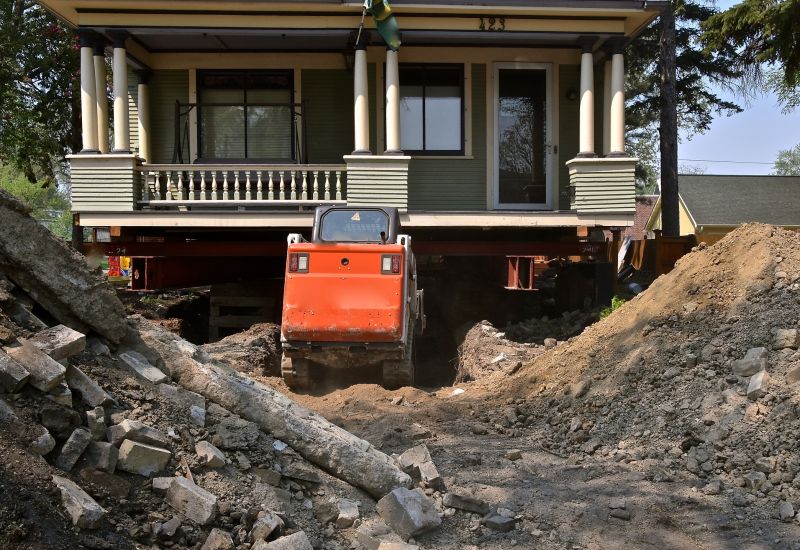
Heavy machinery used to lift and stabilize foundations during repair processes.
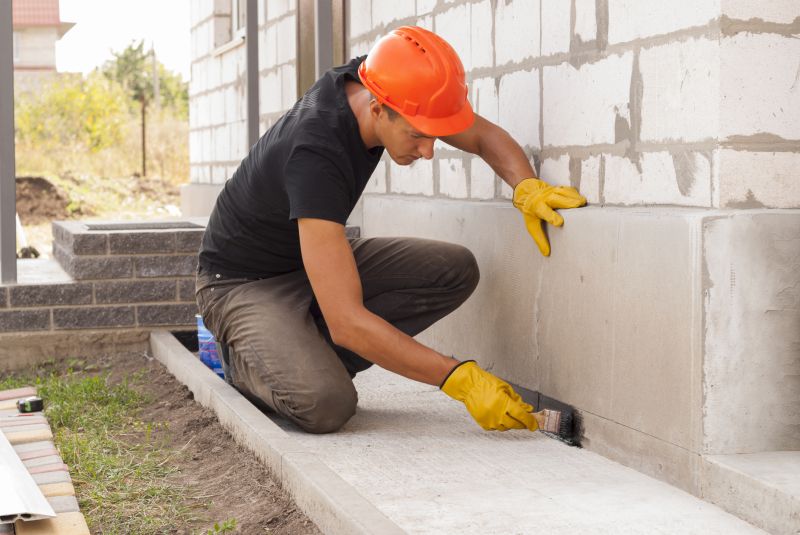
Applying sealants to cracks to prevent water infiltration and further damage.
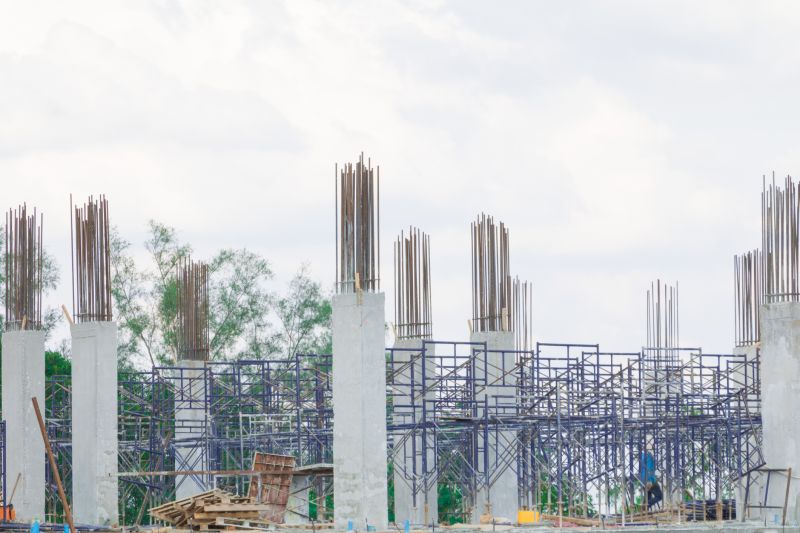
Installing piers to support and lift sinking foundations.
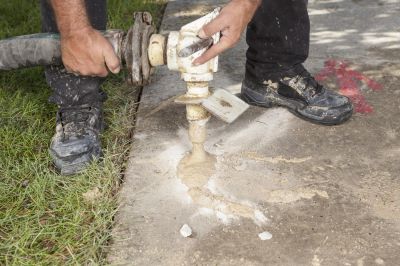
Injecting stabilizing materials to improve soil conditions around the foundation.
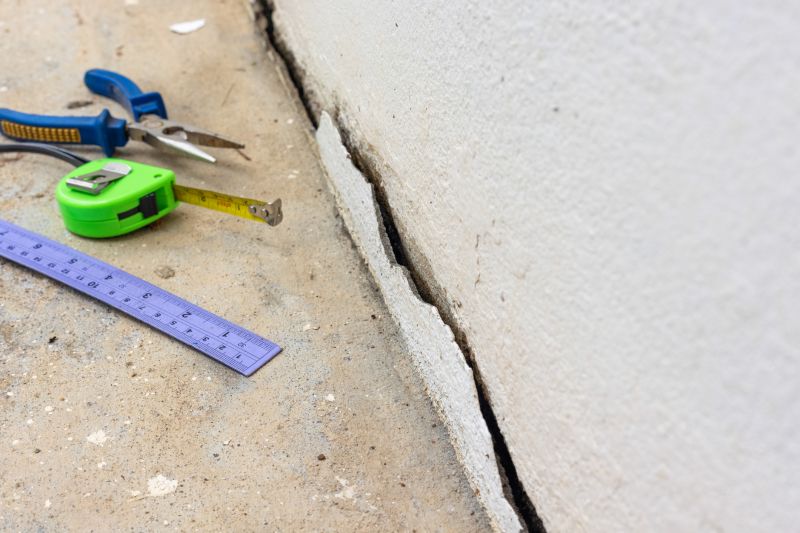
Professionals assessing foundation conditions to determine repair needs.
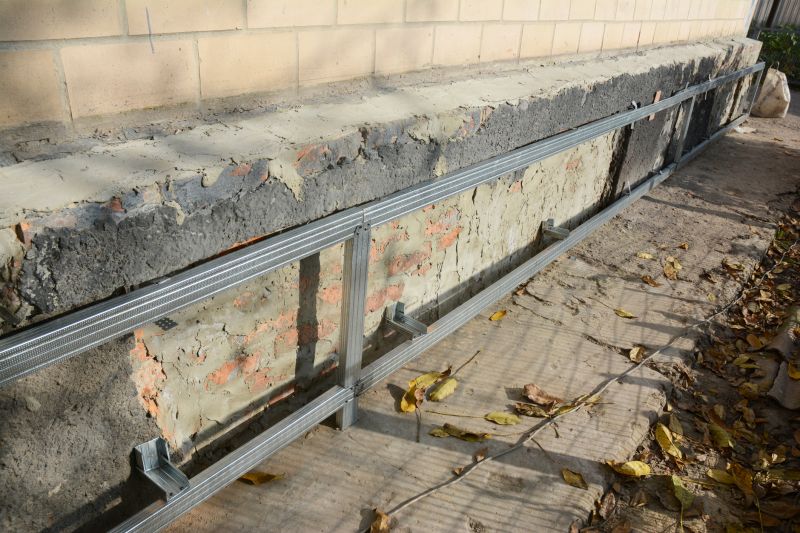
A stabilized and reinforced foundation after repair work.
| Foundation Repair Service | Description |
|---|---|
| Underpinning | Strengthening the foundation by extending its depth or adding support to improve stability. |
| Piering | Using piers to lift and stabilize a sinking or settling foundation. |
| Slab Jacking | Raising sunken concrete slabs by injecting grout beneath them. |
| Wall Stabilization | Reinforcing or repairing basement and foundation walls to prevent bowing or cracking. |
| Drainage Correction | Improving water drainage around the foundation to prevent moisture-related issues. |
| Soil Stabilization | Injecting materials to improve soil consistency and prevent movement. |
| Crack Repair | Sealing and reinforcing cracks to prevent water intrusion and structural deterioration. |
| Foundation Replacement | Complete removal and rebuilding of a compromised foundation. |
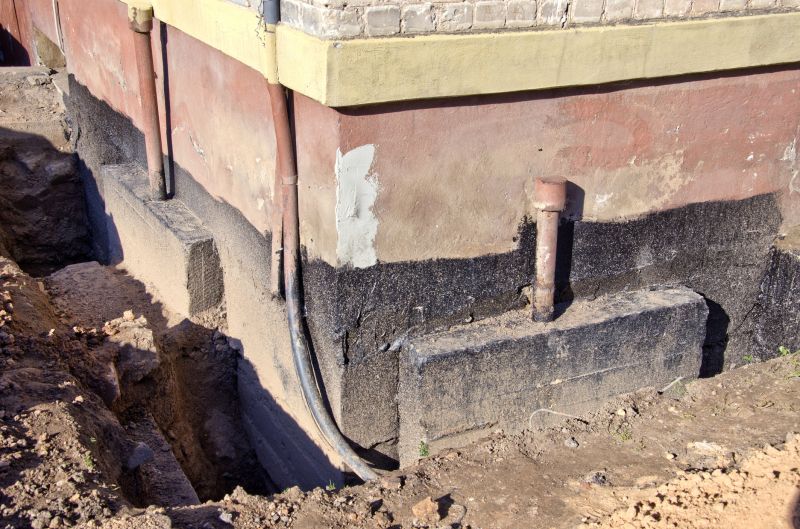
A team working to stabilize a foundation using piers and underpinning techniques.
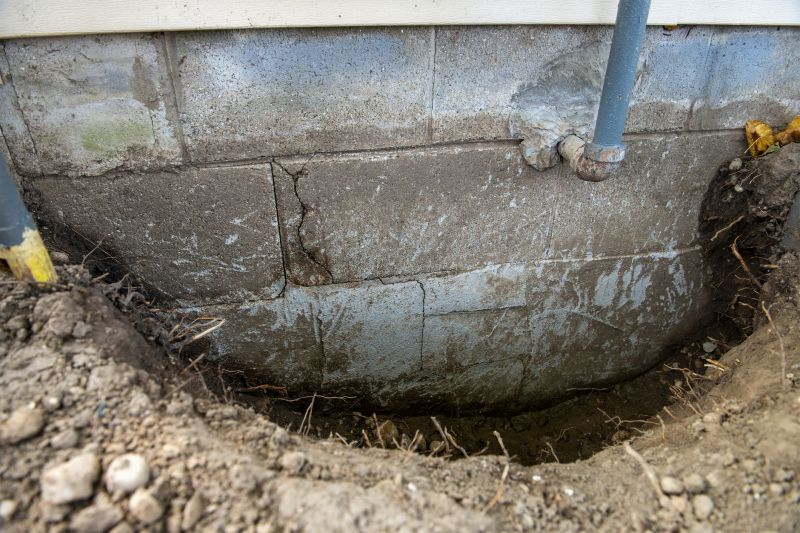
A reinforced wall after stabilization to prevent further bowing or cracking.
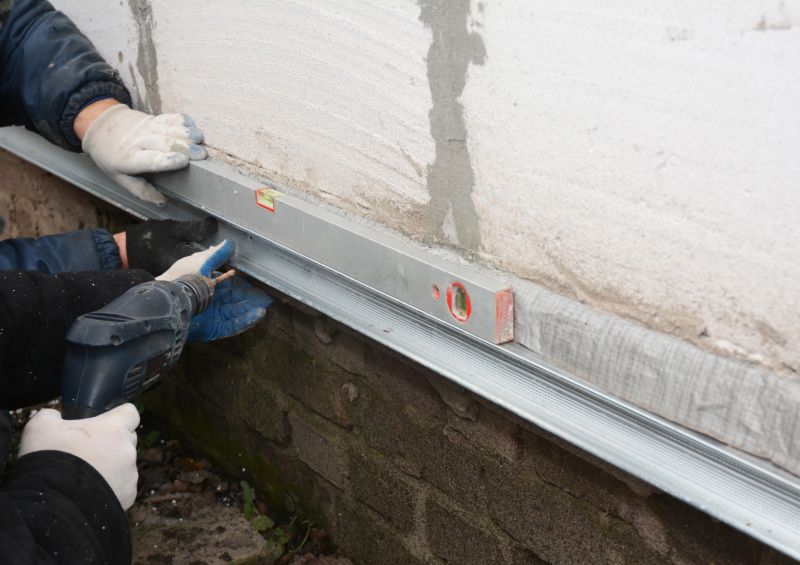
Tools and machinery prepared for foundation stabilization work.
Foundation repair offers numerous benefits, including enhanced structural stability, increased property value, and prevention of further damage. Addressing foundation issues early can also improve the safety and livability of a home. Proper repairs ensure that the building remains level and secure, reducing the risk of costly future repairs. Investing in foundation repair can provide peace of mind and protect the long-term integrity of a property.
Hiring a professional for foundation repair is essential to ensure the job is done correctly and safely. Experts have the experience and equipment necessary to accurately diagnose problems and apply appropriate solutions. Attempting to repair foundations without proper knowledge can lead to incomplete repairs or additional damage. Professionals also understand local soil and weather conditions, allowing for tailored solutions that effectively address specific issues. Choosing experienced contractors helps ensure the durability and effectiveness of foundation repairs.